Emergency Attic Insulation Near Me: What Huntington Beach Homeowners Should Do First
If you’ve just noticed something wrong in your attic, slow down before you start dialing insulation contractors. The first 48 hours are about diagnosis, not installation. Three out of four “attic insulation emergencies” we get called about in Huntington Beach are actually symptoms of a different problem entirely, usually moisture, pests, or roof damage. Get the sequence right and most homeowners spend a couple thousand dollars on a fix that lasts. Get it wrong and you’re looking at five figures. If you’d rather not sort through this yourself, call us at (833) 715-5062 and we’ll walk you through it.
The Four Attic Scenarios That Feel Like Emergencies
When a Huntington Beach homeowner types “emergency attic insulation near me” into Google at 9pm, it’s almost always one of four situations. Each has a different first call, and only one of them should be an insulation contractor.
- Sudden heat spike. The house won’t cool below 80 degrees and the AC runs constantly. This is rarely an insulation emergency, it’s a ventilation and air-sealing problem with an insulation component. The immediate fix is often attic ventilation and radiant barrier work, not ripping out batts.
- Moisture or mold discovery. You saw dark staining on the ceiling, or you poked your head into the attic and something smells musty or looks wet. This is the one that carries the highest financial risk if you address it in the wrong order.
- Pest evidence. Scratching sounds, droppings, or chewed wiring. Insulation often gets contaminated and needs replacement, but only after the entry points are sealed and the animals are gone. Nobody wants to pay to insulate a raccoon condo twice.
- Storm or roof damage. A roof leak after a heavy winter storm, or wind-driven rain that soaked through the eaves. Water intrusion is the trigger, and the roof gets addressed first, always.
In coastal Huntington Beach, the marine layer adds another layer of complexity. Attics that would stay dry in Anaheim or Santa Ana can collect condensation in the Sunset Beach or Seacliff microclimates simply because the air is wetter. We see this regularly in homes along the Bolsa Chica wetlands especially.
Why Moisture Damage Must Be Dried and Sourced Before Insulation Gets Touched
Here’s the rule that saves people the most money: if your insulation is wet but the water source has been stopped, you have roughly a 72-hour window before the situation shifts from “drying and spot replacement” to “full remediation and rebuild.” That window shrinks in Huntington Beach because our humidity is rarely low enough to air-dry a damp attic quickly.
Calling an insulation contractor first when the roof is still leaking or the source of moisture is unknown is like calling a painter after a pipe bursts. You’re skipping the step that determines whether your fix will last six months or twenty years. The right sequence in most cases looks like this:
- Stop the water. Tarp, roofer, plumber, whatever it takes. Nothing else matters until this happens.
- Document everything. Photos, video, and notes before anything is moved or removed.
- Dry the space. Fans, dehumidifiers, and time, or a professional water mitigation crew if the saturation is widespread.
- Assess the insulation. Fiberglass batts that stayed dry can often stay. Wet batts come out. Blown-in cellulose that got soaked will compact and lose its R-value even after drying, so it typically gets replaced.
- Replace with the right material for your attic’s conditions. This is where the diagnostic conversation actually starts, not where it ends.
We’ve pulled some interesting things out of Huntington Beach attics over the years. One that sticks with me is a home in the northeast part of the city, up near the Bolsa Chica wetlands, where the homeowner called us convinced they needed all new insulation because of a “musty smell.” The smell was actually a dead opossum and the insulation was bone dry and fine. Saved them roughly $6,000. We did still end up air-sealing the attic floor and adding a radiant barrier, because the real problem was that their west-facing roof was cooking the second story. But the point stands: diagnose before you demo.
For a deeper dive on how insulation interacts with attic moisture and temperature regulation in our climate, take a look at our Attic Insulation in Huntington Beach page.
How to Assess Your Attic Safely Without Making Things Worse
Before you climb the ladder, know what you’re looking at and what you shouldn’t touch. The most dangerous thing in most attics isn’t the insulation that’s supposed to be there. It’s the insulation that shouldn’t be, and the electrical wiring you can’t see.
What to do:
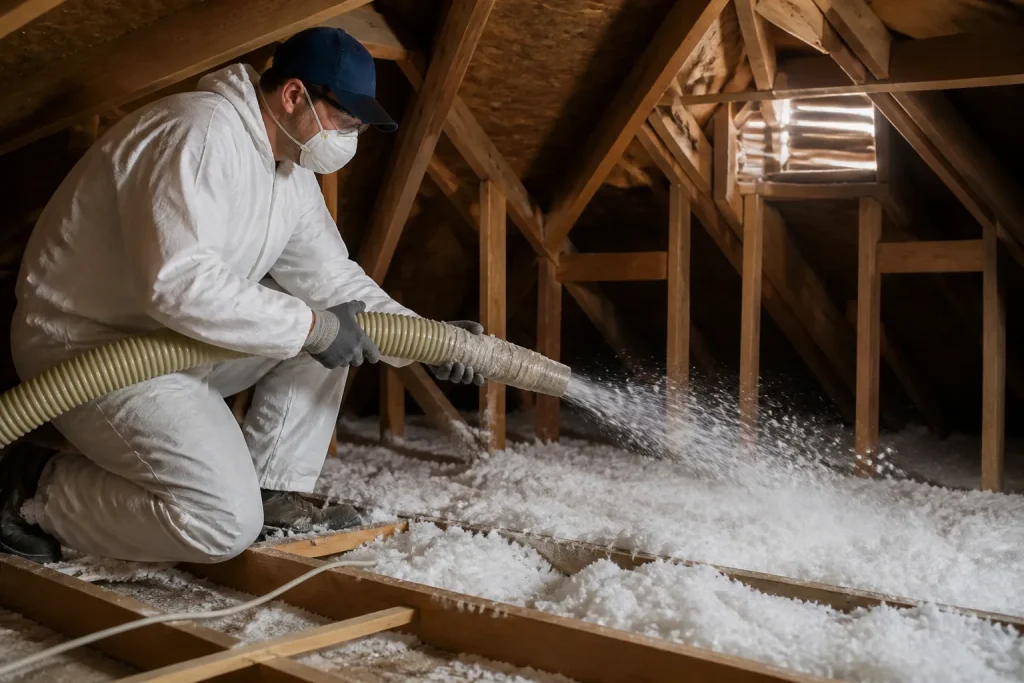
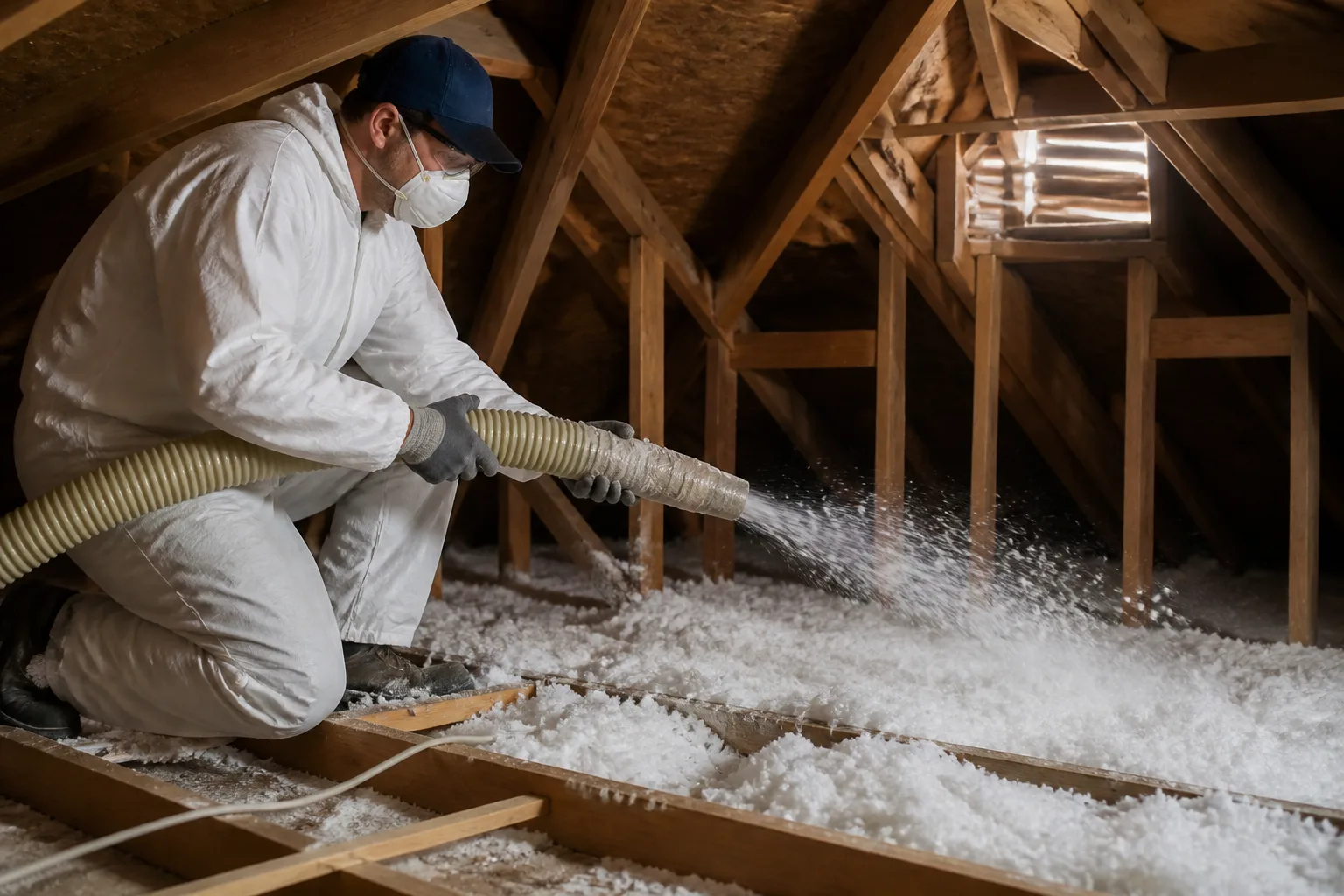
- Wear a mask, gloves, and long sleeves. Disturbing insulation releases fibers and dust you don’t want in your lungs.
- Photograph everything before you touch anything. Wide shots of the whole attic, then close-ups of any damage, staining, or animal activity.
- Check for daylight at the eaves and ridge. If you can see light, you can see where air (and moisture) is moving through the attic.
- Note the current insulation depth and type. You’re looking for batts, loose-fill, or a combination.
What not to disturb:
- Vermiculite insulation. It looks like small pebbles and may contain asbestos, especially in homes built before the late 1980s. If you see it, close the hatch and call a professional. Do not walk through it, do not vacuum it, do not bag it.
- Old batt insulation that’s clearly degraded or pest-contaminated. Hantavirus and other nasties are a real risk in rodent-contaminated insulation in Southern California.
- Anything around electrical wiring or junction boxes. If you see chewed wiring, especially with signs of burning or arcing, stay out entirely and call both an electrician and a pest control company before anyone else.
- Wet insulation hanging from the ceiling. It’s heavy, it’s holding water, and the drywall underneath may be compromised. This is a “look from the hatch, don’t walk through” situation.
If at any point you feel uncomfortable with what you’re seeing, trust that instinct. A good insulation crew in Huntington Beach would rather come out and assess it properly than have you get hurt trying to play hero. That’s our job.
The Insurance Documentation Sequence: What Adjusters Need Before Remediation Starts
This is the step people skip in a panic, and it costs them thousands. Insurance claims for attic damage related to a covered peril, like storm water intrusion or a roof failure, require documentation of the damage before any remediation work begins. Once you remove the wet insulation, you’ve destroyed the evidence.
Here’s what a Huntington Beach homeowner should have in hand before touching anything:
- Time-stamped photos and video of the damage from multiple angles, including wide context shots that show the location of the damage within the attic.
- Photos of the roof exterior and any visible entry points for water. Your adjuster will want to correlate interior damage with an exterior cause.
- The age of your roof and any recent roof repair documentation. Insurance companies will look for reasons to attribute damage to maintenance issues rather than covered events, and having roof history on hand helps your case.
- A written summary of when you first noticed the problem, what conditions preceded it (storm, heat wave, etc.), and what you’ve done so far.
- Contractor estimates for remediation and repair. Insurance adjusters respond to documentation from licensed professionals. A detailed scope of work from a contractor helps establish the cost basis for the claim.
One thing we’ve learned dealing with insurance claims from Pacific City to the Wetlands: adjusters in coastal areas like ours are especially focused on long-term moisture exposure versus a single sudden event. If the insulation shows signs of gradual degradation (compression from age, settled blown-in, or slightly elevated moisture readings in areas without visible water), the claim gets trickier. Sudden, obvious water stain patterns from a storm tell a cleaner story.
When to call a pro: if you’re dealing with an insurance claim, widespread water damage, or anything involving vermiculite or serious pest contamination, call a professional before you start moving things. For homes that just need insulation replaced or upgraded after the dust settles, we’re ready when you are.
Questions to Ask Any Contractor Who Shows Up Same-Day
A true emergency response from an insulation company should be diagnostic, not transactional. When a contractor shows up at your Huntington Beach home within hours of your call (and many of us offer same-day or next-day assessments, which is completely reasonable), here’s how to tell who you’re dealing with.
Ask these five questions:
- “What’s causing the problem, and how do we fix that first?” If the answer is “more insulation” without addressing moisture, ventilation, or pests, you’re not talking to a diagnostician. You’re talking to a salesperson with a truck full of product.
- “Will you remove and replace the existing insulation, or are we talking about adding on top?” Adding new insulation on top of wet, moldy, or pest-contaminated material is a shortcut that guarantees the problem comes back. A legitimate response includes a scope for removal if conditions warrant it.
- “What drying or remediation steps should happen before you start?” The right answer references dehumidifiers, timeframes, or moisture testing. The wrong answer doesn’t reference moisture at all.
- “Which insulation products do you recommend for my specific attic conditions, and why?” This is where you learn whether they install one thing (you’ll hear “spray foam fixes everything”) or whether they’re selection-agnostic and can discuss fiberglass vs. mineral wool vs. cellulose vs. foam as tools to solve different problems. If you hear “whatever’s cheapest,” you should probably keep looking.
- “Are you licensed, insured, and bonded, and can I see your documentation?” A legitimate Huntington Beach contractor shows paperwork voluntarily. A crew that dodges this question is not a contractor you want working in your home.
We carry multiple product lines for a reason. Spray Foam Insulation in Huntington Beach is a great fit for some attics and a terrible fit for others. Icynene open-cell foam can be excellent in coastal moisture conditions where you need an air seal with some breathability. But if you’ve got a fire-hazard concern near an old electrical panel or you want mineral wool’s fire resistance and acoustic performance, Rockwool might be the call. Blown-in from our Blown In Insulation in Huntington Beach page covers the retrofit scenarios where you can’t easily remove existing material. And for fiberglass batt replacement, we have options across several brands including CertainTeed and Knauf.
The point is that no legitimate contractor should show up with a pre-determined answer before looking at your attic. The diagnosis comes first.
Our process is built around one question: what does this attic actually need, given its age, construction, ventilation, and the budget that makes sense for the house? If the answer is a full replacement with the right product, we’ll tell you that. If the answer is “your insulation is fine and you need ventilation work,” we’ll tell you that too. That’s the difference between us and the guy who profits from urgency.
We work across the whole product range because we don’t have a single-product bias to protect. If you’re a homeowner in the Huntington Beach area and you need a professional to assess your situation, call Millbrook Insulation home team at (833) 715-5062. Free estimate, answered by a human, and we’ll tell you honestly what’s going on up there.
Why the First 48 Hours Matter More Than the Insulation Itself
The reason I keep hammering on sequence is that the decisions you make in the first 48 hours after discovering attic damage determine whether you’re spending $2,000 or $12,000. Let me lay that out plainly. A Huntington Beach home with a small roof leak that gets tarped, documented, and dried promptly can often get away with replacing a few batts and resealing the ceiling. That’s a low-four-figure job. The same home left wet for two weeks while the homeowner shops around becomes a different situation entirely. Mold sets in, drywall is involved, the insulation is saturated, and the remediation and rebuild costs climb quickly. That’s a five-figure job, and much of it is for work that could have been avoided.
You don’t need to do everything in the first two days. But you need to do the right things in the right order: stop the water, document the damage, dry the space, and get an honest assessment. If you’re in Huntington Beach and need help with any of these steps, Millbrook Insulation offers free estimates and we’re happy to talk through what your attic actually needs, even if the answer is “nothing yet, but here’s what to watch.” Call (833) 715-5062.
The Bottom Line
An attic insulation emergency in Huntington Beach is almost never solved by immediately installing new insulation. It’s solved by diagnosing the underlying problem first: the water intrusion, the ventilation failure, the pest entry, or the roof damage that created the crisis. The insulation replacement is the last step in the process, not the first. If you’re dealing with moisture, document everything before you touch anything, because your insurance claim depends on it. If you’re dealing with vermiculite or pest contamination, stay out and call a pro. And if you’re dealing with a contractor who wants to install insulation before addressing the cause, get a second opinion.
If you’re in Huntington Beach and you need honest, diagnostic help with your attic, Millbrook Insulation offers free estimates and we’ll walk you through exactly what your situation calls for. Call (833) 715-5062.
Frequently Asked Questions
We offer same-day and next-day assessments for Huntington Beach homeowners, depending on the situation. If you’ve got standing water or visible mold, we’ll prioritize getting out there. Call (833) 715-5062 and we’ll work with your schedule to get an assessment done fast.
No. If the water source is stopped and the insulation is dried within roughly 72 hours, some types like fiberglass batts can often be salvaged. Blown-in cellulose and insulation that’s been saturated for several days or contaminated by pests typically needs replacement. The key is acting fast and assessing the material honestly.
For a typical 1,200 to 1,800 square foot Huntington Beach home, a straightforward insulation replacement (removal of old material, air sealing, and installation of new insulation) typically runs from $3,000 to $8,000 depending on product choice, access, and condition. Remediation of mold or water damage adds significant cost. That’s why we focus so heavily on getting the diagnosis right before replacement work starts.
In most cases, yes. If you’re dealing with an active water intrusion or visible mold, call (833) 715-5062 and we’ll do our best to get an assessment on the calendar same-day. For less urgent situations, we’re typically available within a day or two.
Written by the team at Millbrook Insulation, serving Huntington Beach since 2015.
Need Insulation Help?
Call Millbrook Insulation — licensed & insured, here with fast after-hours help in Huntington Beach.
(833) 715-5062