Fast, Reliable Attic Insulation Across Santa Ana
Most Santa Ana attics we inspect are under-insulated by at least R-19, some by far more. That means your air conditioner works harder every summer afternoon, and your furnace cycles more than it should on those January mornings when Santa Ana dips into the low 40s. We install and upgrade Attic Insulation across every Santa Ana zip code, from the 1920s bungalows in French Park to the mid-century tracts out near Tustin’s border. Call (833) 715-5062 for a free estimate, and we’ll be at your house within 48 hours.
Why Millbrook Insulation Is Santa Ana’s Preferred Attic Insulation Company
We’ve worked in enough Santa Ana homes to know the housing stock block by block. Washington Square has its own pattern: 1930s stucco bungalows with balloon framing and attics that were never insulated at all. Floral Park has larger 1940s and 1950s homes with some original insulation, but it’s usually settled to half its original depth. The tract home subdivisions around Bristol Street and Edinger Avenue were built fast in the 1950s and 1960s, and many still have the builder’s thin fiberglass batts from the original construction. Homeowners here tell us we’re the first contractor who actually looked at what their house was made of before recommending a product. That diagnostic approach, not a default pitch for whatever we have on the truck, is why Santa Ana customers call us back for the next project. Ken Albright runs every job with a building-science-first approach: he sizes up the home’s conditions, then matches the material. We carry eight brands so we never have to push the wrong product on a house that needs something specific. Same-week scheduling and a response time of 48 hours or less to any Santa Ana neighborhood is standard for us.
Radiant Barrier in Santa Ana
Radiant Barrier is one of the most effective upgrades we install in Santa Ana attics, and frankly it’s underused by most insulation companies. Our Attic Insulation in Santa Ana work often starts with an attic that acts like a heat trap. The unshaded stucco walls absorb heat all afternoon, that heat migrates into the attic, and without a radiant barrier the underside of your roof deck radiates heat straight down into the living space. During Santa Ana wind events, the hot, dry air makes this worse. A radiant barrier stapled to the underside of the roof rafters reflects that radiant heat before it can enter the attic air and push through your insulation. This matters in this specific climate because Santa Ana’s daily temperature swing is bigger than in nearby beach cities. The same house that bakes at 92 degrees on a summer afternoon can drop into the 40s the same week in winter. A radiant barrier helps with the heat gain; it’s not the whole answer on its own, but it’s a critical piece in Santa Ana’s inland-influenced microclimate.
Radiant Barrier Installation Details
We install perforated radiant barrier so moisture doesn’t get trapped against the roof deck. The perforations allow air movement while the foil still reflects up to 95% of radiant heat. For Santa Ana attics with tile roofs, which are common in the Spanish-style homes throughout the city, this matters even more. Tile absorbs and radiates heat longer into the evening than composite shingles. Radiant barrier in a Santa Ana attic typically runs $1.50 to $2.75 per square foot installed, depending on attic access and height.
Pairing Radiant Barrier with Insulation
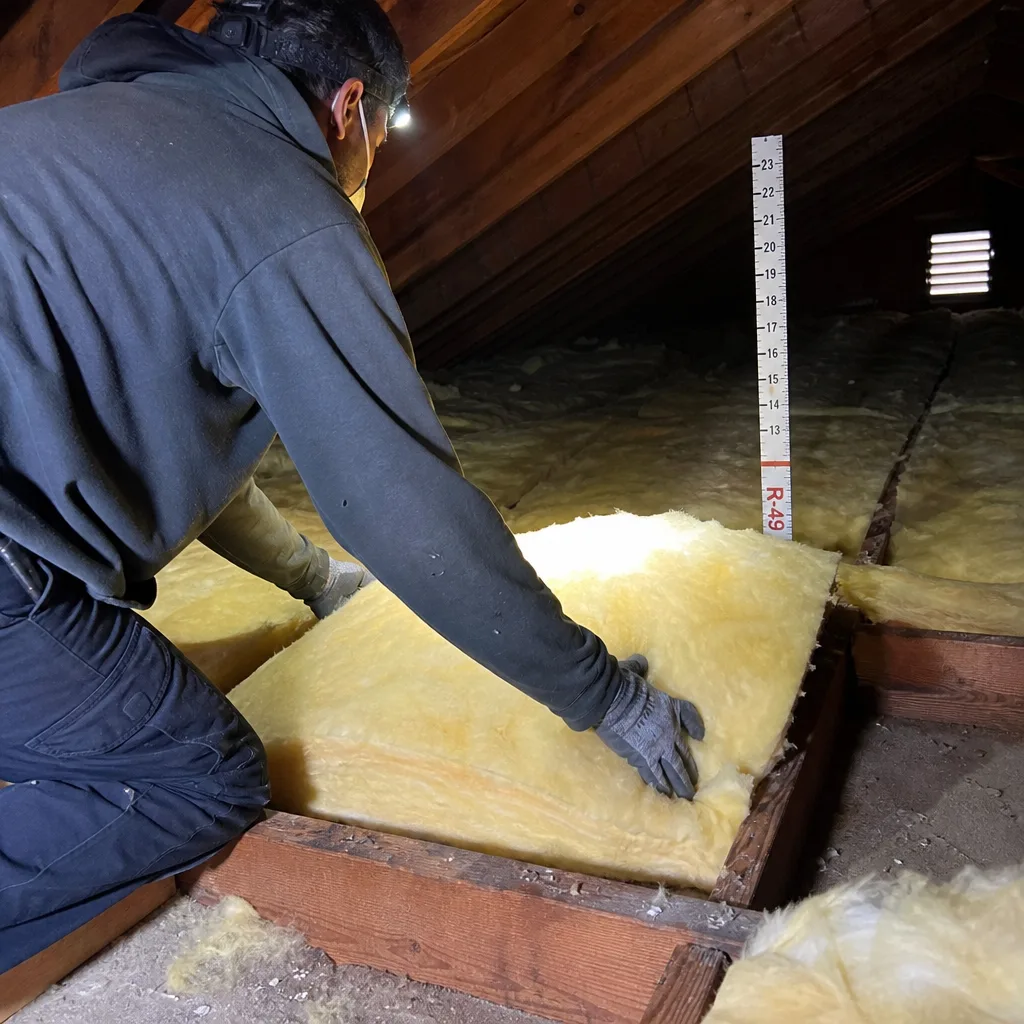
Radiant barrier alone does not stop conductive heat transfer. It works with insulation, not instead of it. The most effective setup we install in Santa Ana is blown-in cellulose or fiberglass at R-38 to R-60 on the attic floor, plus radiant barrier on the roof rafters. That combination addresses both radiant heat gain from above and the conductive heat that moves through the ceiling. If your attic currently has R-19 or less on the floor, we’ll recommend bringing that up first, then adding the radiant barrier.
Attic Cleaning Services in Santa Ana
Attic Cleaning Services in Santa Ana are more involved than in newer cities. The older homes, especially those built before 1950, have attics that have accumulated decades of dust, rodent droppings, and often deteriorating insulation that was never removed. French Park and Washington Square homes from the 1920s frequently have dirt floors in the attic, original wood shingle roofs underneath the current layer, and debris from construction that happened decades ago. We start by removing all the old insulation and debris, vacuuming the attic floor and joist bays, and treating for any pest evidence. Then we air-seal the penetration points: plumbing stack penetrations, electrical penetrations, can light housings, and the gaps around the chimney chase if there is one. Finally we install new insulation to the correct R-value for this climate zone. Typical attic cleaning in Santa Ana costs $1,200 to $2,400 depending on attic size and contamination level. Add insulation and the full job usually sits between $2,800 and $5,500 for a typical 1,200 to 1,800 square foot home.
When Attic Cleaning Is Necessary
If you have rodent activity, you need the attic cleaned before you add insulation. Rodents compress insulation, shred it for nesting, and leave urine and droppings that degrade air quality. Re-insulating over that is a waste of money. Same if your insulation has been wet from a leak: it loses R-value and breeds mold. In Santa Ana, the older the home, the more likely there’s something in the attic that shouldn’t still be there.
What Gets Removed During Attic Cleaning
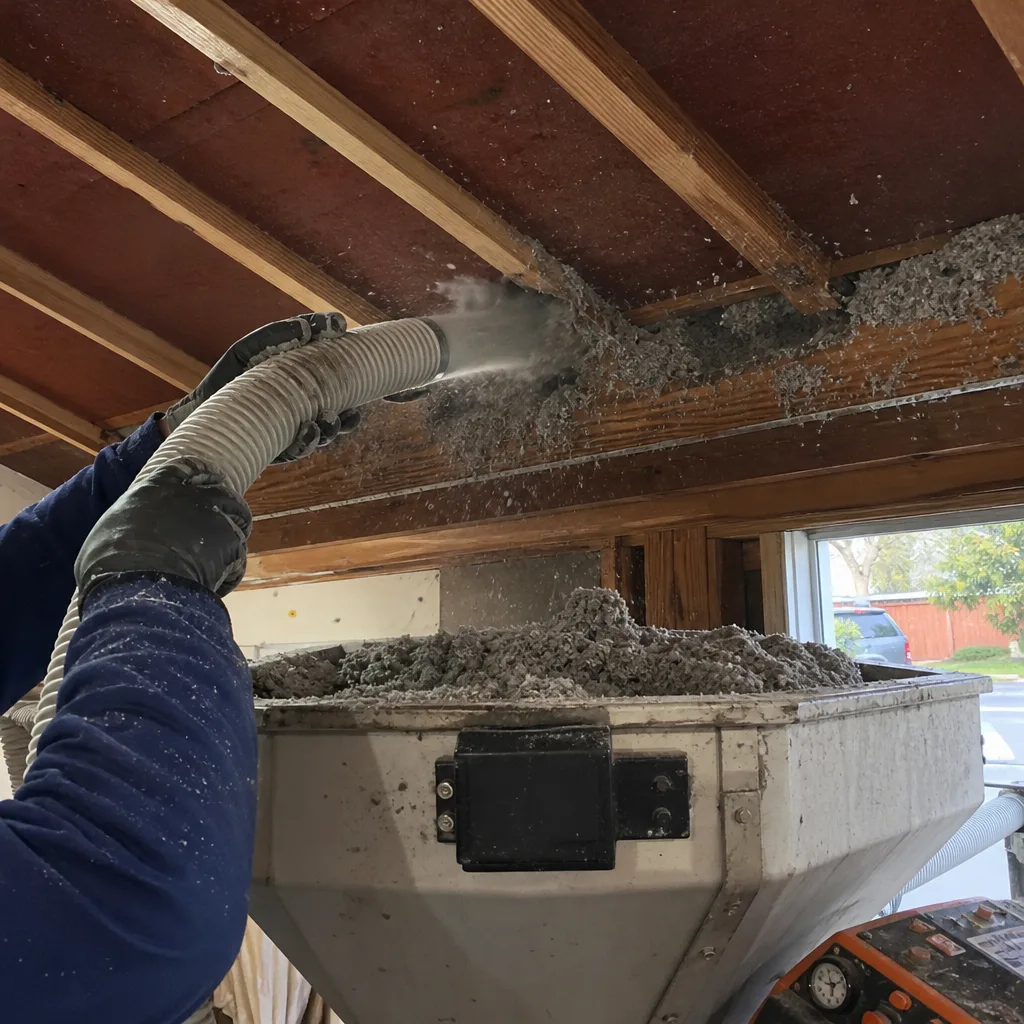
Old fiberglass batts, settled blown-in insulation, rodent nests, construction debris, and any material that has been contaminated. We also look for knob-and-tube wiring, which is common in the pre-1930 Santa Ana housing stock. Knob-and-tube needs to be handled carefully: insulation cannot cover it or it becomes a fire risk. If we find it, we’ll flag it before we do anything else. Ken Albright will walk you through what we found and what the options are.
What happens when you call
- 1
A real person answersNo phone trees — you reach a local pro.
- 2
You get an upfront price rangeHonest numbers before anyone is dispatched.
- 3
A background-checked tech heads outLicensed & insured, dispatched right away.
- 4
You approve before work beginsNothing starts until you say go.
Trusted Brands We Service in Santa Ana
We carry CertainTeed fiberglass for attic batt and blown-in applications, and we stock it locally so Santa Ana customers don’t wait on a supply order from a distributor across the county. Icynene and Demilec spray foam are both in our lineup for attics that need air sealing plus insulation in one pass, which is often the right call in the smaller 1920s bungalow attics where venting is limited. Rockwool mineral wool goes into attics where fire resistance matters: think homes with older knob-and-tube wiring that can’t be covered by insulation but still need something in the joist bays. Eight brands. One contractor. The right material for your home’s specific conditions.
Common Attic Insulation Problems We See in Santa Ana Homes
- Balloon framing and settled insulation. In pre-1940 homes, the wall cavities run continuously from foundation to attic with no fire blocking. Insulation settles unevenly in these cavities over time, leaving gaps right where heat escapes on cool winter mornings. The fix often requires top-up from the attic side with a low-pressure application.
- Radiant heat gain through unshaded stucco walls. Stucco absorbs heat all day and radiates it into the wall cavity. Without a radiant barrier at the roof line, the attic acts as a heat trap. Santa Ana wind events make it worse because the hot, dry air keeps the attic temperature elevated into the evening.
- High-pressure blow-in damage to lath-and-plaster. In French Park and Washington Square, original 2×4 wall cavities without sheathing mean you cannot use standard high-pressure wall blowing. It cracks the plaster. This is a Santa Ana-specific problem that most generalist crews don’t know to look for.
- Single-pane windows and no attic air sealing. Many original Santa Ana bungalows still have single-pane wood windows. Add a leaky attic floor with no air sealing, and you get a house that loses heat on winter mornings and pulls hot attic air into the living space every summer afternoon. Air sealing before insulation is non-negotiable in these homes.
Pricing for Attic Insulation in Santa Ana, CA
Blown-in attic insulation in Santa Ana typically runs $1.50 to $2.75 per square foot installed, depending on depth and material. Attic insulation top-up over existing settled insulation usually costs $1.10 to $1.85 per square foot. A full attic insulation replacement, including removal of old material, air sealing, and new blown-in insulation at R-38, runs $2,800 to $5,500 for a typical 1,200 to 1,800 square foot home. Attic batt insulation runs $1.20 to $2.40 per square foot for fiberglass. The biggest cost variables are attic height, access, whether we need to do electrical work before insulating, and whether you’re adding a radiant barrier at the same time. We’ll give you an exact price before we start. No surprise charges. Call (833) 715-5062 and we’ll come out and measure your attic for free.
Our crew recently worked on a 1925 bungalow in French Park where the attic had minimal insulation and the original lath-and-plaster walls were at risk. We used a low-pressure blow-in method for the walls and installed a radiant barrier in the attic to combat radiant heat gain through the unshaded stucco. The homeowner reported a noticeable reduction in afternoon heat and fewer drafts on chilly mornings.
In Santa Ana’s pre-1950s bungalows, attic insulation work often uncovers uninsulated 2×4 wall cavities with original lath-and-plaster interiors, so blowing insulation requires low-pressure techniques to avoid cracking the plaster. This detail rarely applies to newer inland tract homes, and it’s a big part of why you want a contractor who has actually worked in these older Santa Ana neighborhoods. The 1920s wall cavities in French Park are just 2×4 studs with no sheathing between the stucco and the plaster, which means the plaster keys directly into the lath. Overpack that cavity and you’ll crack the interior wall surface, and then you’re paying a plasterer to fix what an overzealous insulation crew broke.
We Also Serve Cities Near Santa Ana
We work across Orange County’s core, including Tustin, North Tustin, Fountain Valley, and Orange. If you’re in any of those cities, the same eight-brand product lineup and diagnostic-first approach applies. We schedule Santa Ana jobs daily, so there’s no longer wait if you’re just across the city line.
Serving Santa Ana, CA — Our Local Coverage Area
We’re based in the Santa Ana area and know this community well. Use the map below to see our service coverage — if you’re nearby, we can almost certainly help.
FAQs About Attic Insulation in Santa Ana
Your attic is hot because the roof deck absorbs radiant heat from the sun all day and radiates it into the attic air, and insulation on the attic floor does nothing to stop that radiant heat from entering the attic space in the first place. In Santa Ana, where summer afternoons routinely hit the 90s and Santa Ana wind events bring hot, dry air, this effect is stronger than in coastal cities. The fix is a radiant barrier on the underside of the roof rafters, which reflects that heat before it can radiate down. Call (833) 715-5062 and we’ll measure your attic and give you a straightforward recommendation.
Yes, and we do it regularly, but it requires a low-pressure application, not the standard high-pressure wall blowing. The original 2×4 cavities in French Park bungalows have no sheathing and lath-and-plaster interiors, so high-pressure blowing will crack the plaster. We use a low-pressure method and we don’t overpack the cavities. The result is better wall insulation without interior damage. It’s a slower process, but it’s the only right way to do it in these homes.
We recommend an attic inspection and cleaning every 5 to 10 years for most Santa Ana homes, and sooner if you’ve had rodents or a roof leak. Pre-1950 bungalows in neighborhoods like French Park and Washington Square tend to accumulate debris faster because many still have original dirt floors and old construction materials in the attic. If you’re adding insulation, clean the attic first. Insulating over rodent droppings or deteriorated material just seals the problem in.
For Santa Ana’s hot, dry summers and cool winter mornings, we typically recommend blown-in fiberglass or cellulose at R-38 to R-60 on the attic floor, plus a radiant barrier on the roof rafters. CertainTeed fiberglass is a strong default for attic blow-in because it doesn’t settle as much as older fiberglass products. Rockwool mineral wool is the call when fire resistance matters, especially in older homes with knob-and-tube wiring that can’t be covered. Icynene or Demilec spray foam is the right choice when the attic needs air sealing and insulation in one pass, which is common in the smaller bungalows with limited venting. The material depends on what your house actually needs.
No. A radiant barrier reflects radiant heat, which is the dominant heat transfer mode in summer. In winter, you’re dealing with conductive heat loss through the ceiling, and that requires insulation on the attic floor, not a barrier on the roof rafters. That’s why we recommend both: R-38 or higher on the attic floor for winter heat loss, and a radiant barrier for summer heat gain. Santa Ana’s daily temperature swing means the same house needs to solve both problems. For an exact recommendation and a free estimate, call (833) 715-5062.
Written by Ken Albright, Owner at Millbrook Insulation, serving Santa Ana with diagnostic-first attic insulation since the company’s founding.