Fast, Reliable Attic Insulation Across Costa Mesa
Attic insulation in Costa Mesa typically runs $1,800 – $4,200 for a full re-insulation job on a standard 1950s – 60s ranch home, with most projects completed in one day. That’s the honest range we quote homeowners across 92626, 92627, and 92628 every week. If you’re calling because your upstairs rooms bake in August or your AC runs nonstop, you’re probably dealing with what most Costa Mesa homes have: original batts that settled decades ago or got chewed through by roof rats. Call us at (833) 715-5062 and we’ll diagnose what’s actually happening in your attic before recommending anything.
We work throughout Costa Mesa constantly, so our crews can usually reach you within 48 hours. That matters a lot when you’ve got exposed joists and midday heat pushing through.
Why Millbrook Insulation Is Costa Mesa’s Preferred Attic Insulation Company
Millbrook Insulation isn’t a one-product shop. We carry eight insulation brands spanning fiberglass, mineral wool, spray foam, and recycled cellulose because Costa Mesa’s older housing stock doesn’t all need the same fix. A shallow attic in an east side 92626 ranch with poor venting calls for something different than a west side 92627 crawlspace that holds moisture. We size up the structure first. Then we match the material.
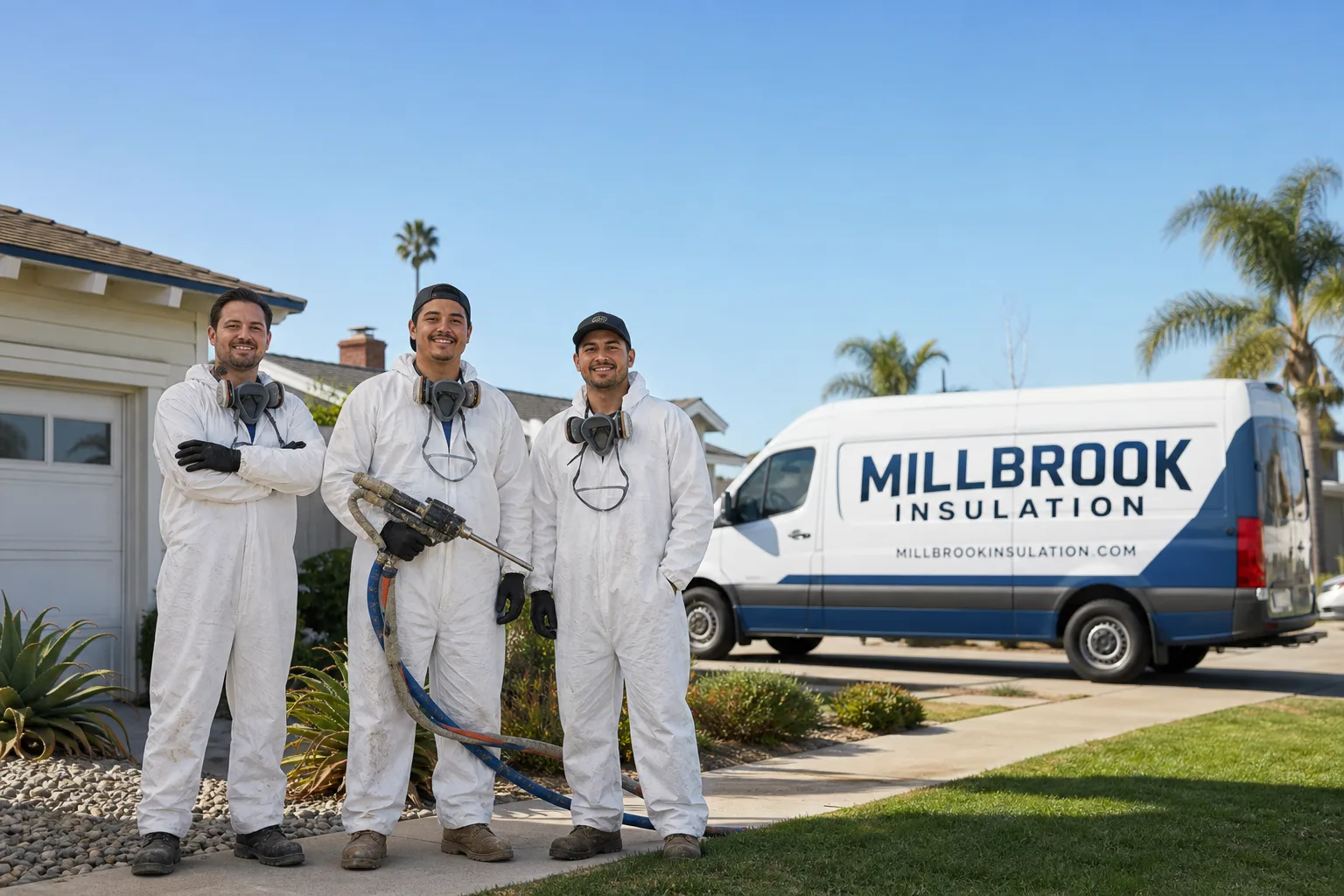
Our Attic Insulation team works in Costa Mesa’s older tracts regularly enough to know what lurks in them. Sagged batts off joists, rodent tunnels through fiberglass, unpermitted garage conversions with zero insulation, condensation from marine-layer humidity. These aren’t surprises to us, they’re Tuesday. Ken Albright built this company around diagnosing the actual condition of a home’s thermal envelope, not just blowing in whatever product is on the truck.
Attic Cleaning Services in Costa Mesa
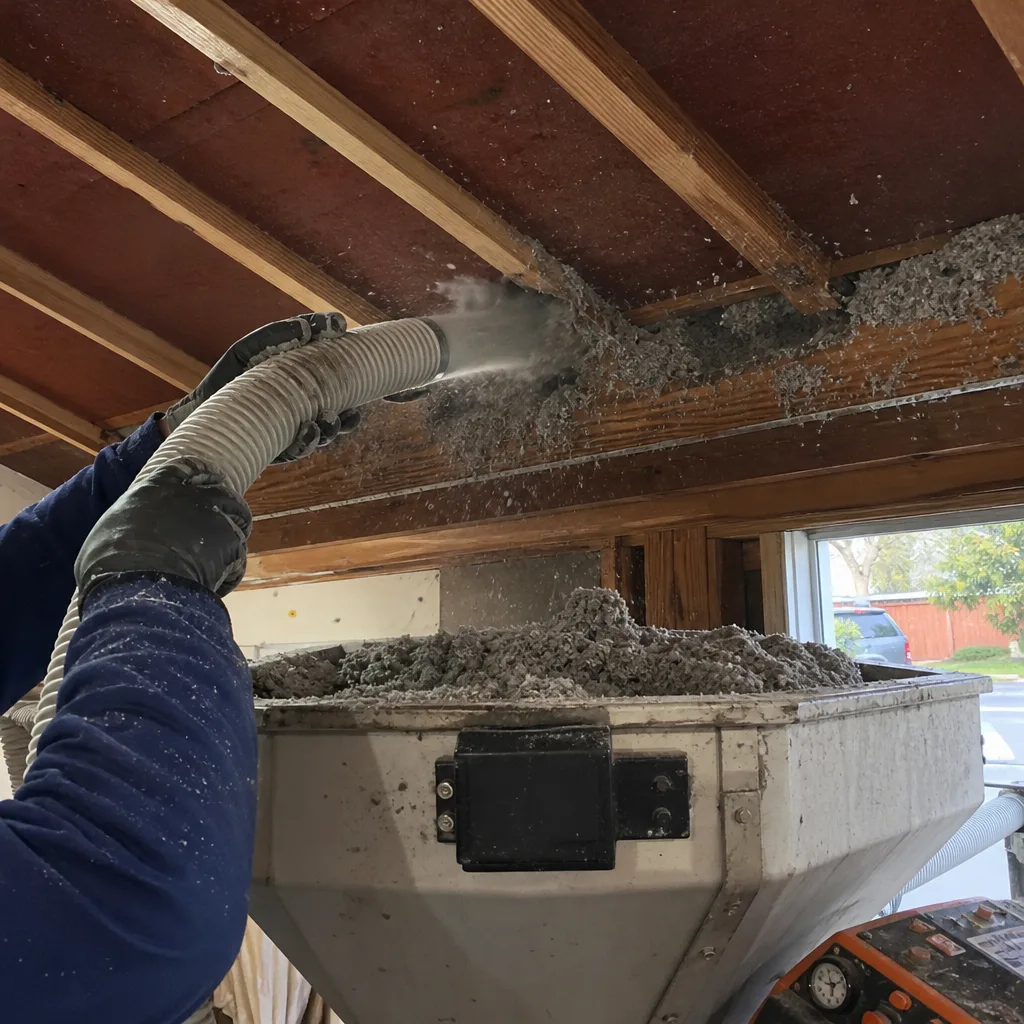
Attic Cleaning Services in Costa Mesa cost between $650 and $1,500 depending on attic size, the amount of debris, and whether rodent remediation is needed. In older Costa Mesa homes with shallow attics and decades of accumulated dust, droppings, and damaged insulation, cleaning isn’t optional before new insulation goes in. You don’t want to blow fresh material over rat feces and moisture-damaged batts. It defeats the purpose. Most mid-century attics here need a full clean-out before we install anything new.
Debris Removal and Sanitization
We pull out old, compacted, or rodent-damaged insulation by hand and with HEPA-filtered vacuum equipment. Then we sanitize the attic surfaces. In homes near Fairview Park or down toward the 92627 flats, roof rat activity is common enough that droppings and nesting material are a standard part of the cleanup. A sanitized attic is the baseline for a clean re-insulation job.
Rodent-Proofing Before Insulation
Cleaning without sealing entry points just invites the rats back. We inspect the eaves, gable vents, and roof penetrations during the cleaning service and either install rodent-proof vent covers or flag the areas you need patched before insulation goes in. For west-side Costa Mesa properties near the Santa Ana River channel, this step matters more than most people expect.
What happens when you call
- 1
A real person answersNo phone trees — you reach a local pro.
- 2
You get an upfront price rangeHonest numbers before anyone is dispatched.
- 3
A background-checked tech heads outLicensed & insured, dispatched right away.
- 4
You approve before work beginsNothing starts until you say go.
Attic Mold Removal in Costa Mesa
Attic Mold Removal in Costa Mesa typically runs $800 – $2,200 depending on the square footage of affected sheathing and joists, the severity of surface growth, and whether ventilation repairs are also required. The marine layer here is the culprit in most cases. Warm, moist air rises into a poorly vented attic, hits cooler sheathing at night, and condenses. That condensation feeds mold on the underside of the roof deck, especially in 1950s ranches that were built with minimal ridge or soffit venting.
Moisture Source Correction
Killing mold without fixing the moisture source means it returns within a season. We locate where humid air is entering the attic – often through unsealed top plates, recessed light fixtures, or bathroom exhaust fans venting into the attic instead of outside. Then we correct the airflow problem before recommending insulation that won’t trap moisture against the sheathing.
Treatment and Prevention Coating
We treat affected surfaces with EPA-registered antimicrobial solutions and can apply a preventative coating on the sheathing afterward. For Costa Mesa homes where condensation is the recurring issue, we often recommend open-cell spray foam from Icynene or Demilec for the roofline in specific situations, or Rockwool batts that resist moisture and won’t support mold growth. The right choice depends on your specific attic geometry and venting setup, and we’ll show you why we recommend what we do.
Trusted Brands We Service in Costa Mesa
We stock and install material from Owens Corning, CertainTeed, Rockwool, Icynene, Demilec, and GreenFiber. For Costa Mesa homes, CertainTeed fiberglass batts are a solid everyday choice for standard attics with adequate venting. Rockwool serves homeowners who want fire resistance and acoustic dampening along with thermal performance – which matters in dense 92627 neighborhoods where homes sit close together and freeway noise carries. And GreenFiber blown-in cellulose is what we consistently spec for older tract homes with irregular joist spacing, because it fills voids and settles tight. We keep materials staged close enough to Costa Mesa that most jobs don’t wait on supply.
Common Attic Insulation Problems We See in Costa Mesa Homes
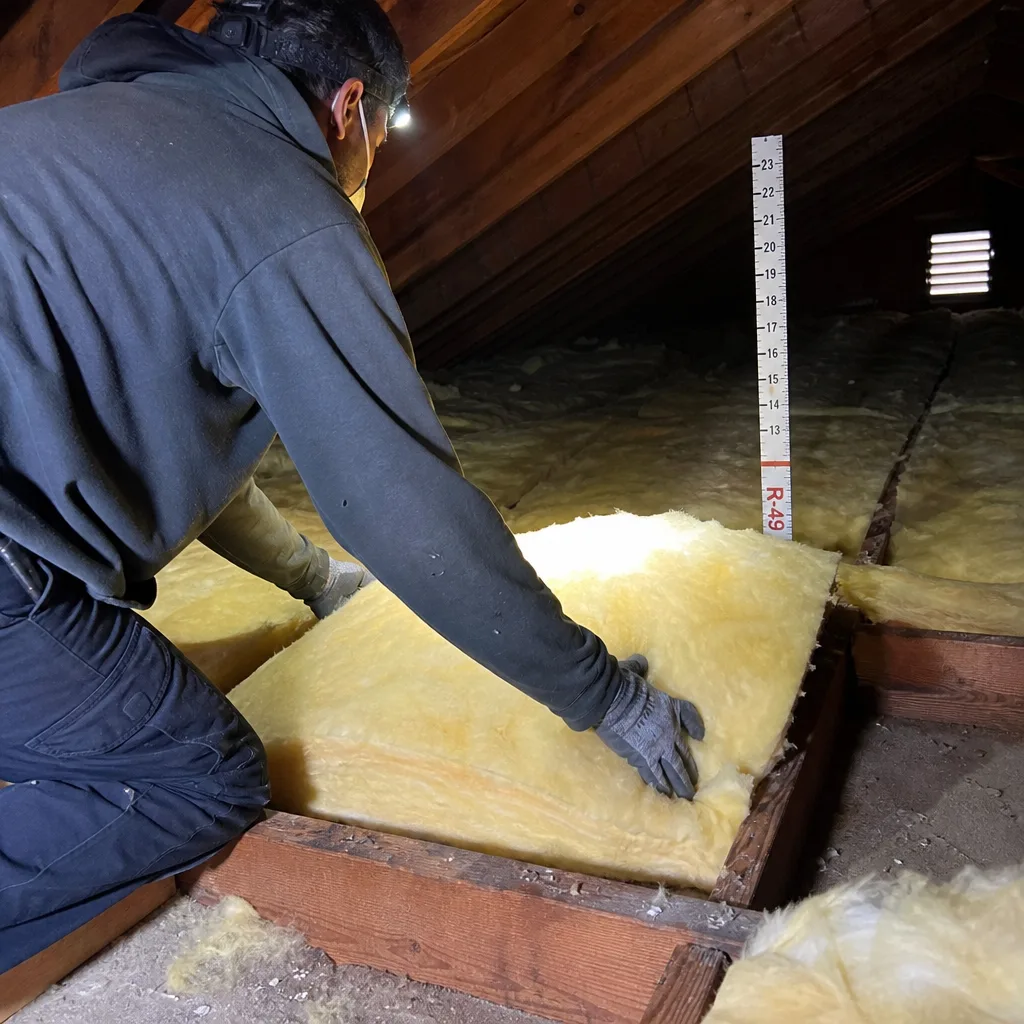
- Slumped and settled batts. Original fiberglass batts from the 1950s and 60s weren’t installed to today’s standards, and most have sagged off the joists or compressed to a fraction of their original R-value. This leaves the ceiling nearly uninsulated in stretches, which is why certain upstairs rooms feel 10 degrees hotter than the rest of the house.
- Roof rat tunnels through insulation. This is the Costa Mesa signature problem, especially in the west-side 92627 neighborhoods and anywhere near natural corridors like Talbert Regional Park. Rats burrow through batts, push them aside, and create air channels that short-circuit the insulation’s performance. The tunnels also leave droppings and urine throughout the material.
- Condensation from marine-layer humidity. Morning fog and damp air rise into attics that lack proper ventilation. When that moisture meets cooler sheathing at night, it condenses. Over years, this grows mold on joists and roof decking and degrades the insulation’s effectiveness. Attics that stay damp also attract pests.
- Unpermitted additions with no insulation. Costa Mesa has a lot of converted garages and add-on rooms that were built without permits. Many of these spaces have no insulation in the attic cavities at all. Homeowners often don’t realize until the room is unusable in summer or winter, and by then the fix requires retrofitting from the inside out.
Pricing for Attic Insulation in Costa Mesa, CA
For a typical Costa Mesa ranch home with a shallow attic, here’s what we quote:
- Full attic clean-out and re-insulation (cellulose blown-in to R-38): $1,800 – $3,200
- Attic batt replacement with CertainTeed or Rockwool: $2,200 – $4,200
- Rodent-proofing and air-sealing (added to insulation): $400 – $900
- Attic mold removal and treatment (pre-insulation): $800 – $2,200
- Crawlspace or attic top-up (blown-in over existing batts): $900 – $1,800
Your actual cost depends on attic access, square footage, how much old material needs to come out, and whether rodent remediation is part of the job. We give free estimates over the phone and after an inspection, and the quote we give is the price you pay. Call (833) 715-5062 to get your number.
We Also Serve Cities Near Costa Mesa
Millbrook Insulation serves homes throughout central Orange County, including Costa Mesa, Newport Beach, Fountain Valley, Huntington Beach, and San Joaquin Hills. If you own a mid-century home or a newer build in any of these areas, our Attic Insulation team can be there within a couple of days.
Serving Costa Mesa, CA — Our Local Coverage Area
We’re based in the Costa Mesa area and know this community well. Use the map below to see our service coverage — if you’re nearby, we can almost certainly help.
FAQs About Attic Insulation in Costa Mesa
Because roof rats are endemic in Costa Mesa’s older neighborhoods, particularly the 92627 west side and areas near greenbelts and the river channel. Rats tunnel through fiberglass batts, shred them for nesting, and leave the attic with air channels that destroy R-value. If you re-insulate without sealing entry points and installing rodent-proof vent covers, the new material gets wrecked within a year or two. In our work across 92626, 92627, and 92628, we treat rodent exclusion as a standard part of the job rather than an upsell. Call (833) 715-5062 for an inspection, and we’ll tell you exactly what’s happening up there before quoting anything.
The morning fog and damp air that roll in from the coast raise the moisture load inside attic cavities, especially when combined with warm daytime heat radiating off the roof. That cycle – warm moist air by day, cool condensation at night – means insulation has to resist moisture absorption. Some materials, like open-cell spray foam, can hold moisture against the sheathing if ventilation isn’t addressed, so we often spec Rockwool batts or properly vented blown-in cellulose instead. The honesty here matters: spraying foam into a damp, unvented Costa Mesa attic can create worse problems than it solves.
Yes. We see unpermitted garage conversions throughout Costa Mesa’s older tracts, and most have zero insulation in the ceiling cavity. Because these spaces usually lack a proper attic, we typically insulate from below or use closed-cell spray foam applied directly to the underside of the roofline where clearance allows. This gets done carefully and to code, because we’re not going to expose a homeowner to a fire-safety issue by covering combustible materials incorrectly. If you’ve got a converted garage that swings 20 degrees with the weather, call us and we’ll figure out the right approach for that specific structure.
In most shallow mid-century attics, blown-in cellulose from GreenFiber is the strongest choice. Shallow attics often have uneven joist spacing, cross-bracing, and odd voids that batts can’t fill effectively. Cellulose settles into those cavities and delivers R-38 without the air gaps you get from laying batts. We often pair it with air-sealing at the top plates and penetrations, because sealing is what stops the warm air from leaking into the attic in the first place. That combination performs extremely well in older Costa Mesa ranches.
We treat the mold first, correct the moisture source, and only then install new insulation. The treatment involves EPA-registered antimicrobial application on affected sheathing and joists, followed by ventilation diagnosis – usually adding or upgrading soffit and ridge vents or fixing bathroom fans that vent into the attic. Only when the space is dry and stable do we install new material. If we installed over active mold, you’d be paying twice. For a free attic assessment and an exact quote, call us at (833) 715-5062.
Written by Ken Albright, Owner at Millbrook Insulation, serving Costa Mesa and greater Orange County.