How to Choose the Right Insulation Company in Huntington Beach
Choosing the right insulation company in Huntington Beach comes down to one thing: whether the contractor can honestly tell you when their default product isn’t the best fit for your house. Most companies can’t, because they only install one or two materials. The right contractor will walk you through the tradeoffs, show you where spray foam earns its cost and where fiberglass does the job for less, and give you a recommendation based on your attic’s actual conditions rather than their inventory.
Here’s the thing nobody tells you when you start calling around Huntington Beach for insulation quotes. Every company you talk to will be licensed. They’ll all be insured. They’ll all say they do quality work. That’s not where the difference lives.
The difference shows up in one specific moment: when you ask whether their main product is ever the wrong choice. A contractor who hesitates, who pivots back to a sales pitch, who can’t name a single scenario where they’d recommend something other than what they sell hardest, has just told you everything you need to know.
We pulled one out of a garage over in Edwards Hill last week where a homeowner had been sold closed-cell spray foam for an unconditioned garage ceiling. It worked, sure. It also cost about three times what a dense-packed cellulose job would have cost for the same R-value in that application. The contractor who sold it wasn’t wrong about spray foam being a good product. They were wrong about it being the right product for that ceiling.
That’s the single-material contractor problem, and it’s the most common bad outcome in Huntington Beach insulation hiring.
The Single-Product Contractor Trap
Here’s how it works. A company invests in spray foam rigs, trains a crew on that equipment, builds a distributor relationship with one foam manufacturer, and structures their pricing around that installation method. Then every attic they walk into gets a spray foam recommendation. Not because the attic needs spray foam. Because the company needs to keep that rig running.
The same thing happens on the blown-in side. Companies that own a cellulose machine recommend cellulose for every retrofit. Fiberglass batts-only crews default to batts. None of these materials is inherently bad. What’s bad is a recommendation that flows from equipment ownership instead of building science.
So how do you spot it? Ask the question directly: “What are the cases where your primary product is the wrong choice?”
Listen to the answer. A contractor with genuine material range will have a specific, technical answer. Something like: “Closed-cell foam against a roof deck in a home with a history of leaks can trap moisture we can’t see, so we’d want to address the leak source first and might spec an air-permeable insulation instead.” Or: “If your attic already has decent fiberglass but the real problem is air leakage, adding more batts won’t fix anything. You need air sealing first.”
An answer like that tells you the contractor is diagnosing, not defaulting. An answer that sounds like a brochure tells you the opposite.
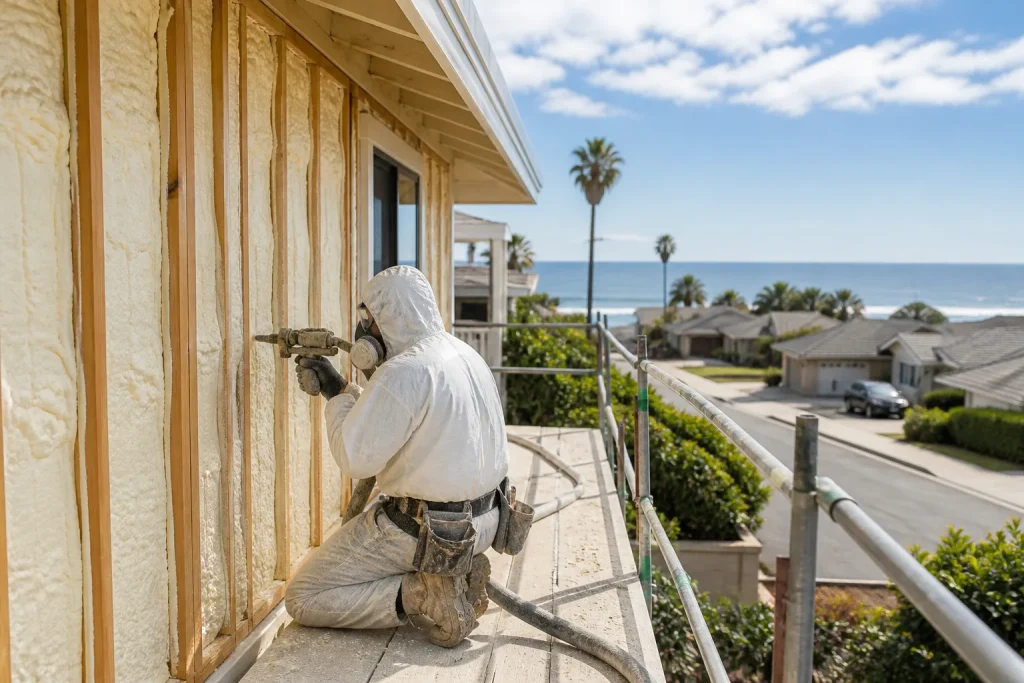
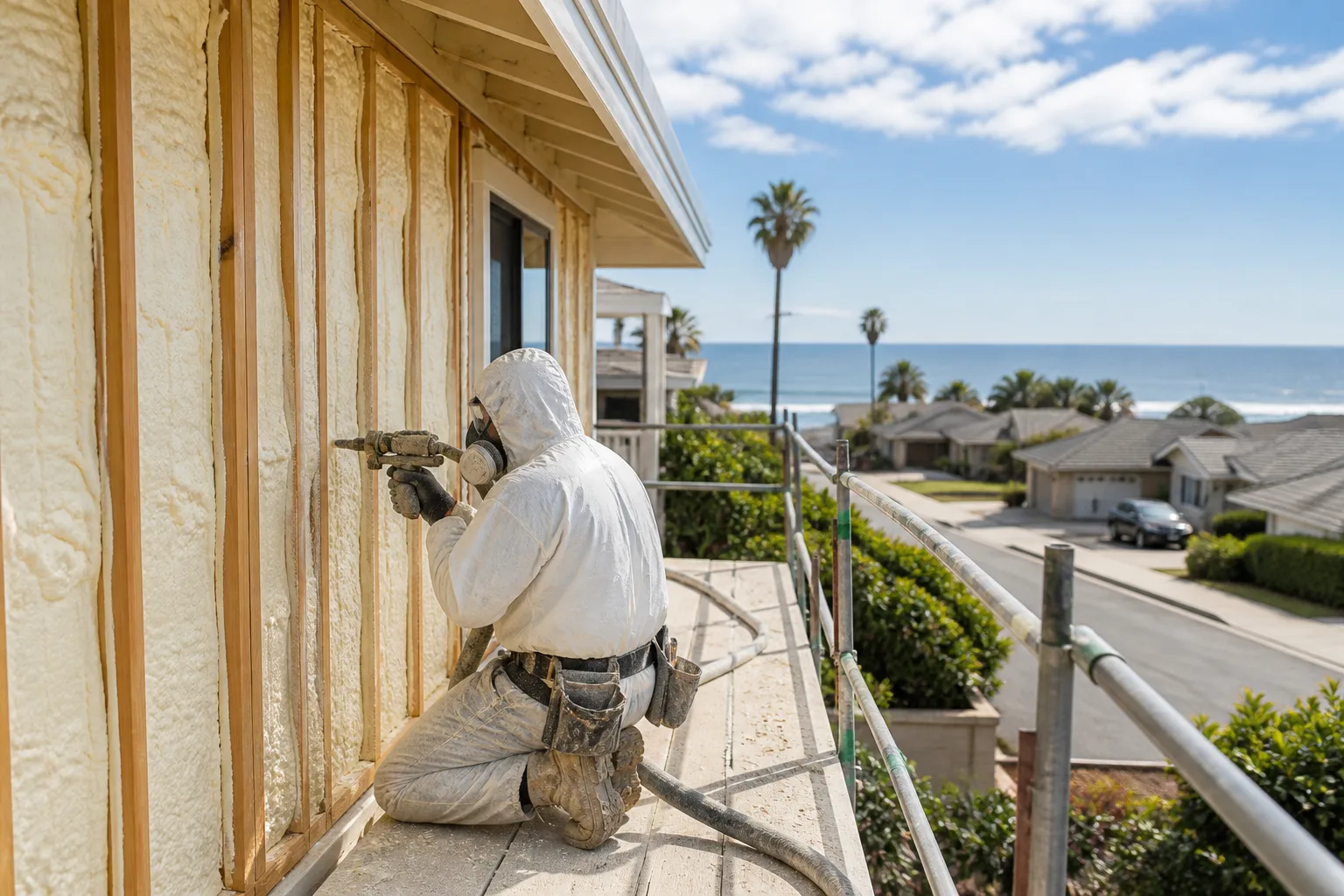
We carry eight insulation brands across every major material category, partly because it’s easier to be honest about product limitations when you’re not married to any single one of them. Owens Corning and CertainTeed fiberglass for straightforward, budget-conscious attics. Spray foam in Huntington Beach for air-sealing and high-performance targets, using Icynene or Demilec systems depending on moisture conditions and R-value goals. Rockwool where fire resistance and acoustic isolation matter. GreenFiber cellulose for blown-in applications where recycled content and a dense, settling pack make sense. Eight brands. One contractor.
Five Diagnostic Questions to Ask Before Accepting Any Quote
These questions cut through the sales script and force a real diagnostic conversation. You don’t need to be a building scientist to ask them. You just need to pay attention to whether the answers reference your house or a generic one.
- “What are the cases where your primary product is the wrong choice?” – Covered above, but it’s the single most revealing question in insulation hiring. Ask it first.
- “What’s currently in my attic, and does it need to come out?” – A real answer involves an inspection, mention of whether existing insulation is compacted, water-damaged, or rodent-soiled, and a recommendation on removal versus topping off. In Huntington Beach, where marine air drives humidity into attics for months at a time, this question matters more than homeowners realize. Moisture-compromised insulation doesn’t just lose R-value. It holds that damp against framing members.
- “What R-value are you targeting, and why?” – The Department of Energy’s Zone 3 recommendation for attics in our region is R-30 to R-60, but a good contractor explains where in that range your home should land and what’s driving the number: age of the home, HVAC load, existing air sealing approach. A contractor who gives you a price without ever discussing R-value is guessing.
- “Is air sealing included, or is that a separate line item?” – This one separates performance contractors from square-footage-and-out operations. Insulation slows conductive heat transfer. Air leaks are a convective problem. You can’t fix one with the other, and any quote that doesn’t address air sealing at all is missing half the building science. In our attic work throughout Huntington Beach, we treat air sealing as part of the job because insulation without it is half a solution.
- “Will you check my attic ventilation while you’re up there?” – In Huntington Beach, where summer attics bake and winter marine air sits heavy, ventilation is the difference between an insulation job that lasts and one that degrades early. A contractor who says they’ll assess it without prompting the question is a good sign. A contractor who dismisses it is a red flag.
What Licensing and Certifications Actually Mean in California
Let’s be direct about something. A California contractor’s license means the company passed a law exam and a trade exam, carries a bond, and has workers’ comp in place. It means they’re legally allowed to do the work. It does not mean they’re good at it.
Certifications are similar. Manufacturer training programs, like the ones tied to Owens Corning or CertainTeed product lines, mean the crew has been through a curriculum on proper installation technique for that specific product family. That’s genuinely useful, because installation quality matters as much as the material itself. A poorly installed R-38 batt performs like R-19 or worse. But a certification doesn’t guarantee diagnostic skill. It guarantees product-specific training.
The credential that signals genuine product breadth is harder to fake: a contractor who can show you multiple manufacturer certifications across different material categories. Fibrous insulation training from one source, spray foam training covering both open-cell and closed-cell chemistry, blown-in certification for cellulose work. That portfolio of training is expensive to maintain, and it’s only worth maintaining if the company actually installs across that range.
When you’re talking to a Huntington Beach insulation contractor, ask which manufacturers they’re certified with and whether they can show you proof. Then ask the follow-up: “Why those brands?” The answer should connect to performance. For example, we carry Johns Manville and Knauf lines alongside our other fiberglass options because their batt dimensions and density specs give us options for odd joist spacing and retrofit situations where a less compressible product matters. That’s a materials answer, not a distributor answer.
How to Read a Quote for Scope Completeness
A good insulation quote in Huntington Beach is boring to look at. It has line items. It has square footage. It has R-value targets. It has a material specified by product name, not just “spray foam” or “batts.” And it has the peripheral work itemized: air sealing, removal and disposal of old insulation if needed, attic ventilation assessment, protective measures for your HVAC equipment or recessed lighting cans.
Here’s what to look for and what to push back on:
- “Square-footage-only” pricing. If the whole quote is a price per square foot with no mention of what’s currently in the attic, what material is going in, or what R-value is being targeted, that’s a production contractor running a volume game. You’re not getting a diagnostic. You’re getting a number.
- No removal line item when removal is clearly needed. If you’ve had roof leaks, raccoons, or decades of rodent activity in a Huntington Beach attic, that blown fiberglass or batt insulation is contaminated. It needs to come out. A quote that just buries new insulation over the top of it is a quote that skips the hard, dirty part of the job to stay competitive on price.
- Air sealing listed as an add-on, not a default. Some contractors will quote air sealing separately to keep the headline insulation number low. That’s not dishonest, but it means you need to add the line items together for a real comparison. Ask for it itemized, then compare all-in numbers.
- Ventilation mentioned nowhere. This is the quiet killer in coastal attics. We’ve been in Huntington Beach attics where soffit vents were painted shut decades ago, leaving zero intake airflow. It didn’t matter what product went on the attic floor. The thermal performance was already compromised. A complete quote addresses ventilation or at minimum notes it was checked.
When a quote is complete, it reads like a plan. When it’s incomplete, it reads like a number. You’re hiring for the plan.
The Reference Check That Actually Matters
Most reference checks are useless. You call a past customer, ask if the crew was polite, ask if the work got done on time, and you get a pleasant endorsement that tells you nothing about whether the insulation works.
Ask a different question: “Did your energy bill change after the job was done?”
That’s the only outcome measure that reveals whether the work actually performed. A crew that shows up on time and leaves the jobsite clean has given you a pleasant experience. But a pleasant experience with bad thermal performance means a year from now you’re writing a different check to fix it.
Two follow-up questions worth asking the same reference:
- “Did the crew explain why they were using the material they chose, or did they just start installing?” – You want to hear that there was a conversation about the recommendation.
- “Did the final bill match the quote?” – Change orders happen in construction, but the change order should come with an explanation, not a surprise on the final invoice.
In our experience, the homeowners who ask these questions are the same ones who end up with insulation systems that work. They didn’t get there by knowing more about building science than us. They got there by refusing to accept a recommendation they didn’t understand.
That’s really the whole ballgame: if the contractor can’t explain why this material in this attic at this R-value, they might still do fine work. But they haven’t earned your confidence.
When to Call a Pro
Insulation work is not a weekend DIY project, especially in Huntington Beach attics where you’re working in tight spaces, around electrical wiring, and in heat that can reach 140 degrees in August. Blown-in installation requires specialized equipment. Spray foam requires training, proper protective gear, and an understanding of chemical off-gassing windows. Even batt work involves cutting around framing, can lights, and ductwork without compressing the material.
Beyond installation, the diagnostic piece is where a pro earns the money: figuring out what’s already there, what’s failing, what the air sealing picture looks like, and which material solves the actual problem rather than the assumed one. If any of that sounds unfamiliar, get a pro involved before you spend money on materials.
Related services in Huntington Beach: attic insulation and blown-in insulation cover the most common residential scenarios, while spray foam work is a different animal entirely and worth reading about separately if you’re chasing air sealing or high-performance targets.
The Bottom Line
Most insulation hiring mistakes in Huntington Beach happen because homeowners choose a contractor before they choose a material. That’s backwards. The material should follow the diagnosis, and the diagnosis should come from someone who isn’t financially motivated to steer you toward one product family.
Ask the uncomfortable question about when their main product is wrong. Demand a quote with line items, R-value targets, and air sealing. Check the references for energy bill outcomes rather than crew politeness. And if the answers sound like a script instead of a conversation about your specific attic in your specific house, keep looking.
If you’re in Huntington Beach and want help sorting through the options, we’re glad to walk you through it. Millbrook Insulation offers free estimates, and we’ll give you an honest read on what your home needs, including the cases where the cheaper material is the smarter call. Reach us at (833) 715-5062.
Frequently Asked Questions
Look for material range and diagnostic honesty rather than licensing alone. Ask which products the company installs, whether they can explain when each is the wrong choice, and whether their quote includes air sealing, R-value targets, and a ventilation check. A contractor who only installs one material will almost always recommend that material, regardless of what your home actually needs.
Call (833) 715-5062 for a free estimate and an honest material recommendation.
Rarely. Specialist companies bring deep expertise in their one product, which matters for complex spray foam work, but that same focus creates a blind spot: they’re structurally motivated to recommend their specialty even when it’s not the best fit. A multi-material contractor can give you a straight comparison without the financial pressure to steer you toward one thing.
Costs vary widely by material, attic condition, and scope. Fiberglass batt work is the most economical option for straightforward attics, blown-in cellulose or fiberglass runs in the middle, and spray foam is the premium option with the strongest air-sealing performance. The quote differences between materials are significant, which is why the diagnostic conversation matters: you shouldn’t pay for spray foam if cellulose solves your problem.
Call (833) 715-5062 for a specific quote on your home. Estimates are free.
Yes, with a thermal camera and an attic inspection, but most homeowners won’t have those tools. The practical test is your energy bill. If a properly sized insulation job didn’t move the needle on heating and cooling costs, either the installation was flawed or air sealing was skipped. Ask contractors you’re considering for past customers who can speak to utility bill changes specifically.
Yes, but compare scope rather than price. Pull two or three quotes, then lay them side by side and look at what’s included: R-value targets, air sealing, removal, ventilation assessment, and material specifics. A cheaper quote that omits air sealing isn’t cheaper. It’s just a smaller scope that will cost you on the back end.
Written by the team at Millbrook Insulation, serving Huntington Beach since 2015.
Need Insulation Help?
Call Millbrook Insulation — licensed & insured, here with fast after-hours help in Huntington Beach.
(833) 715-5062